01 · Brief
One product needed both operational clarity and a credible identity
The engagement covered the experience of an enterprise edge-cloud platform and the material used to explain it. My role combined design ownership, UX flows, research, data visualisation, marketing, and branding over a four-month period beginning in January 2024.
IAM became the deepest product workstream because every administrative action depends on understanding who receives access, through which role or policy, and at what level of the infrastructure. The work therefore started with relationships and journeys rather than isolated screens.
“Make access relationships visible enough to configure, review, and change without losing the surrounding context.”
02 · Scope
Three connected workstreams shaped the platform
01
Identity and access
Journeys and interfaces for users, groups, roles, policies, permissions, and access levels.
02
Operations dashboard
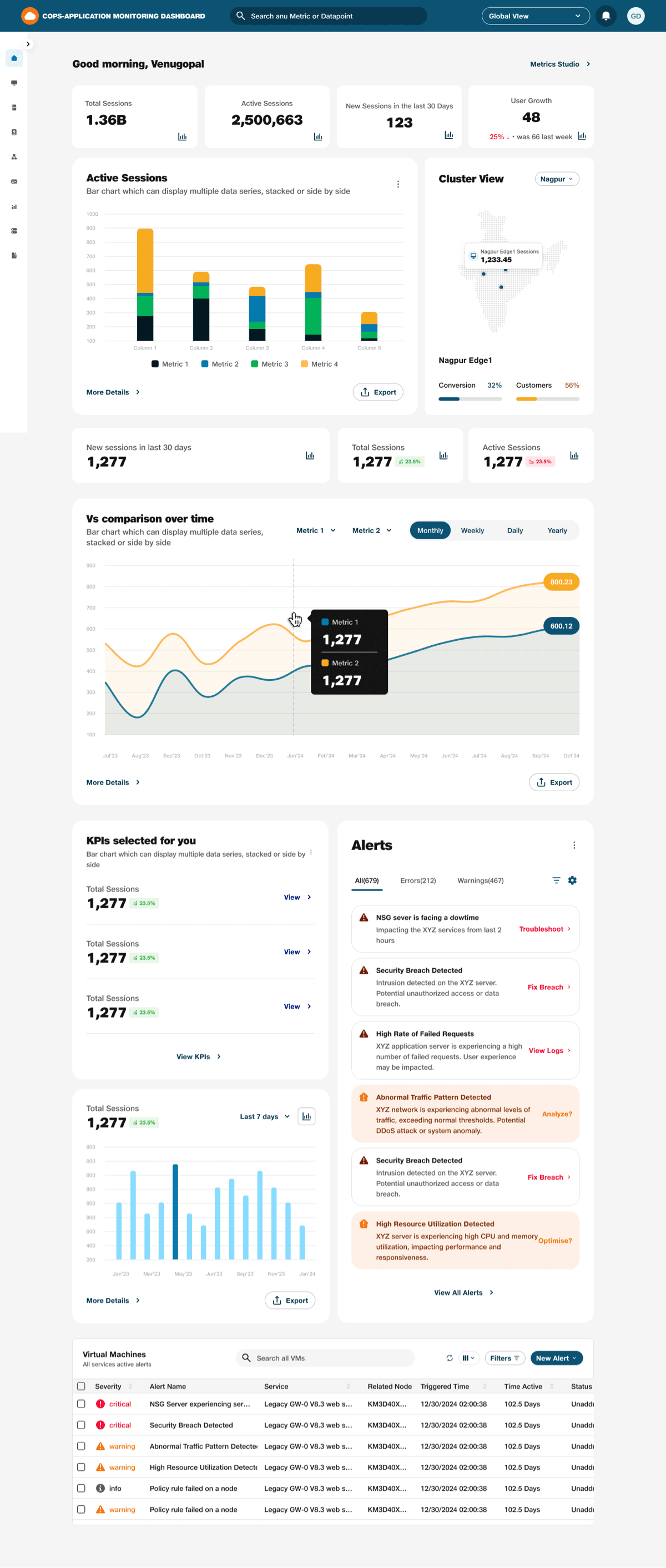
Data-visualisation studies for infrastructure health, usage, incidents, and operational activity.
03
Brand and marketing
Product identity, brand applications, marketing imagery, and a launch-oriented product video.
Keeping these workstreams connected mattered. The product interface established how the service behaved; the operational dashboard showed what it was doing; and the identity gave teams a consistent way to present it.
03 · Journey architecture
Mapping IAM as a network of dependent objects
I created end-to-end journey maps for users, roles, user groups, and policies. The maps followed creation, assignment, editing, and pending states across the system, revealing where one object depended on another and where an administrator needed context before proceeding.
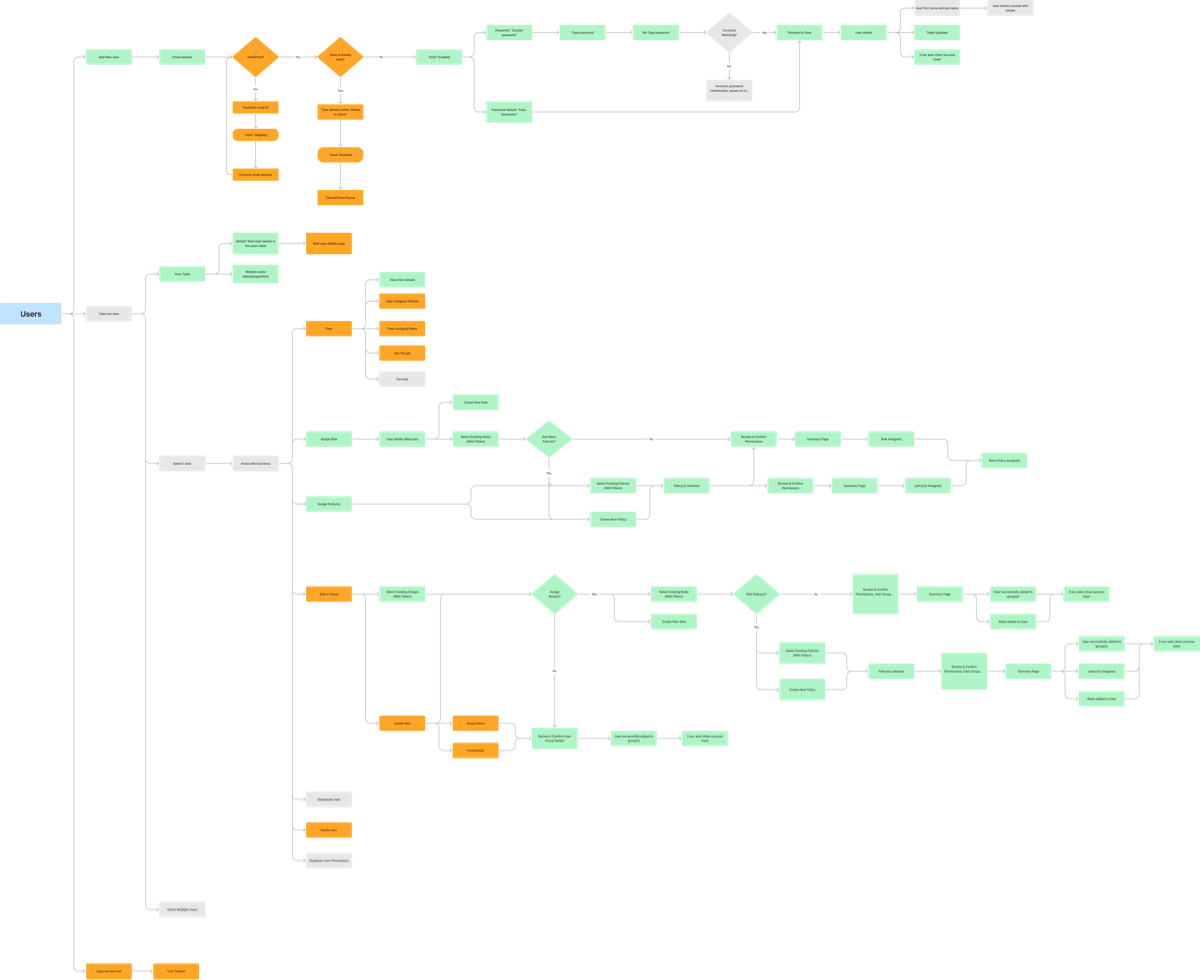
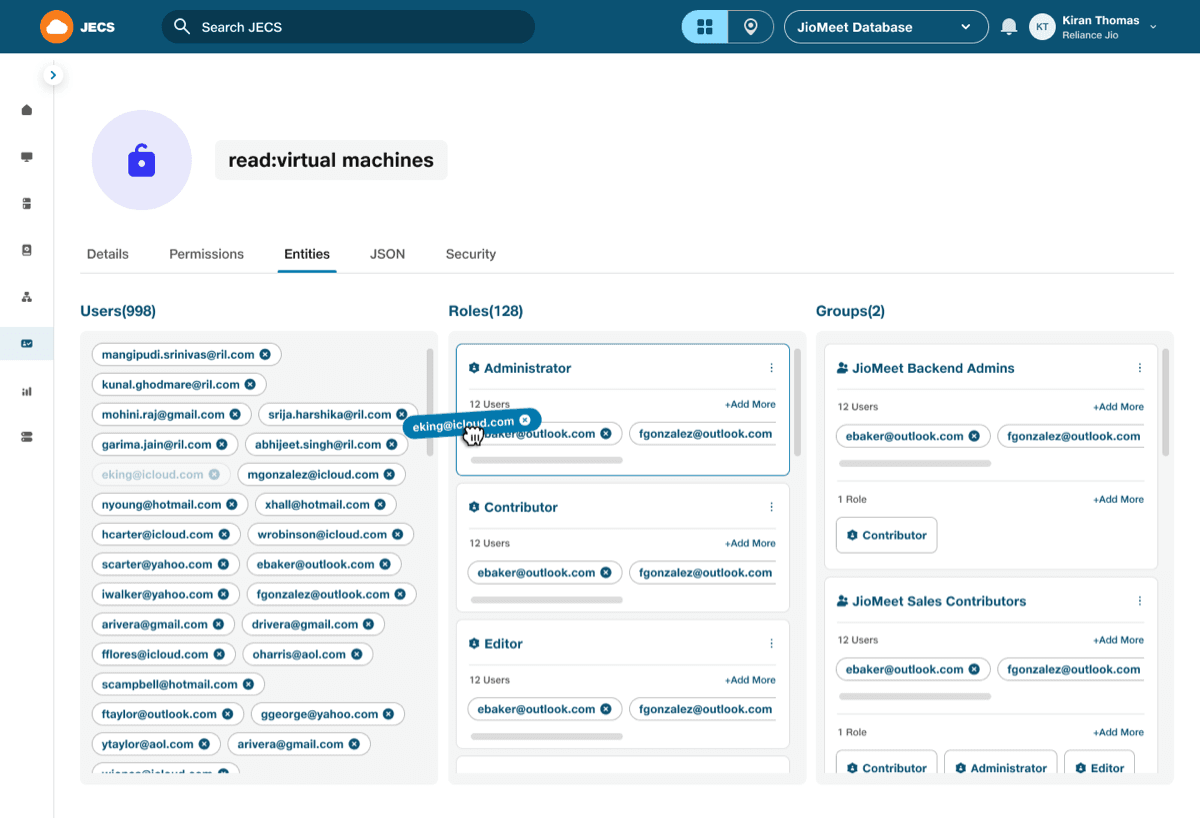
This model informed both navigation and interaction. Instead of treating a role, policy, or user as a closed record, the interface keeps assignments and inherited relationships close to the object being managed.
04 · Core workflow
A guided pipeline for creating and assigning access
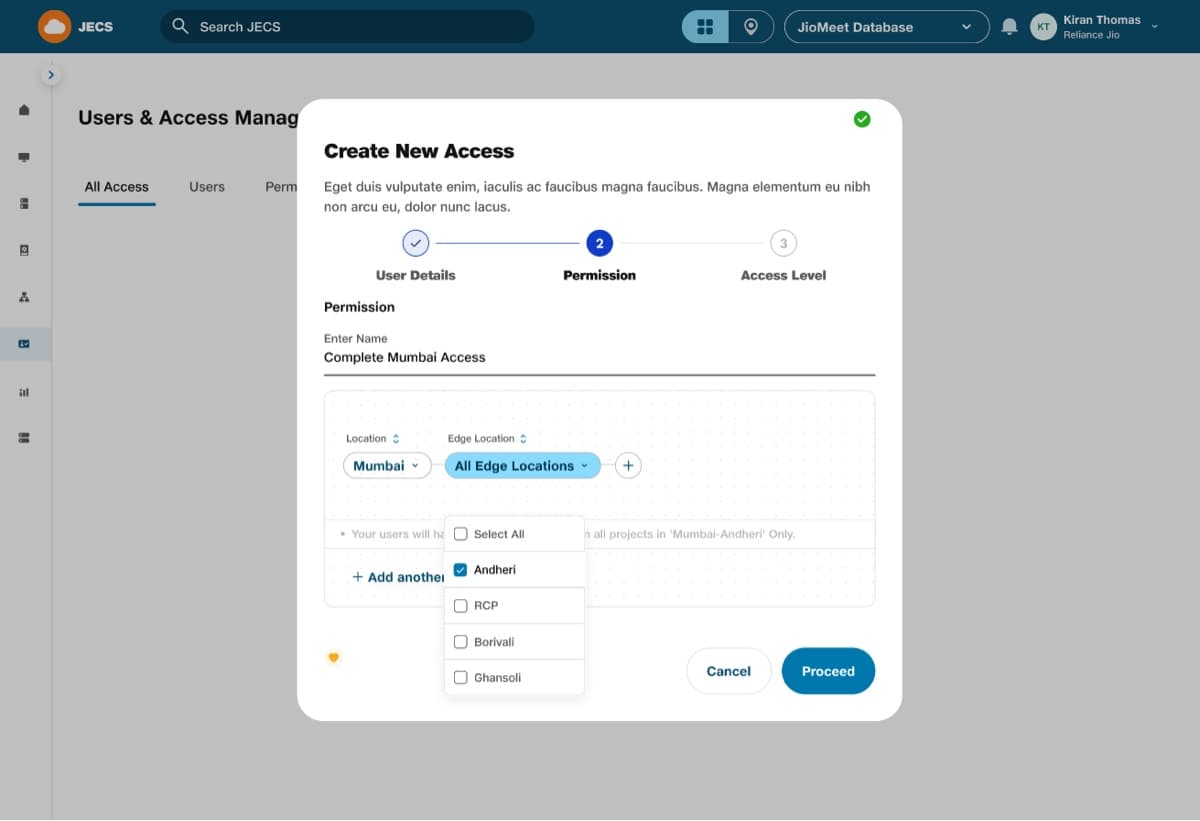
The Create New Access flow separates identity details from permissions and access level, while keeping the sequence visible. Permissions can be assembled from services, projects, locations, and other platform entities, then reviewed before the access definition is applied.
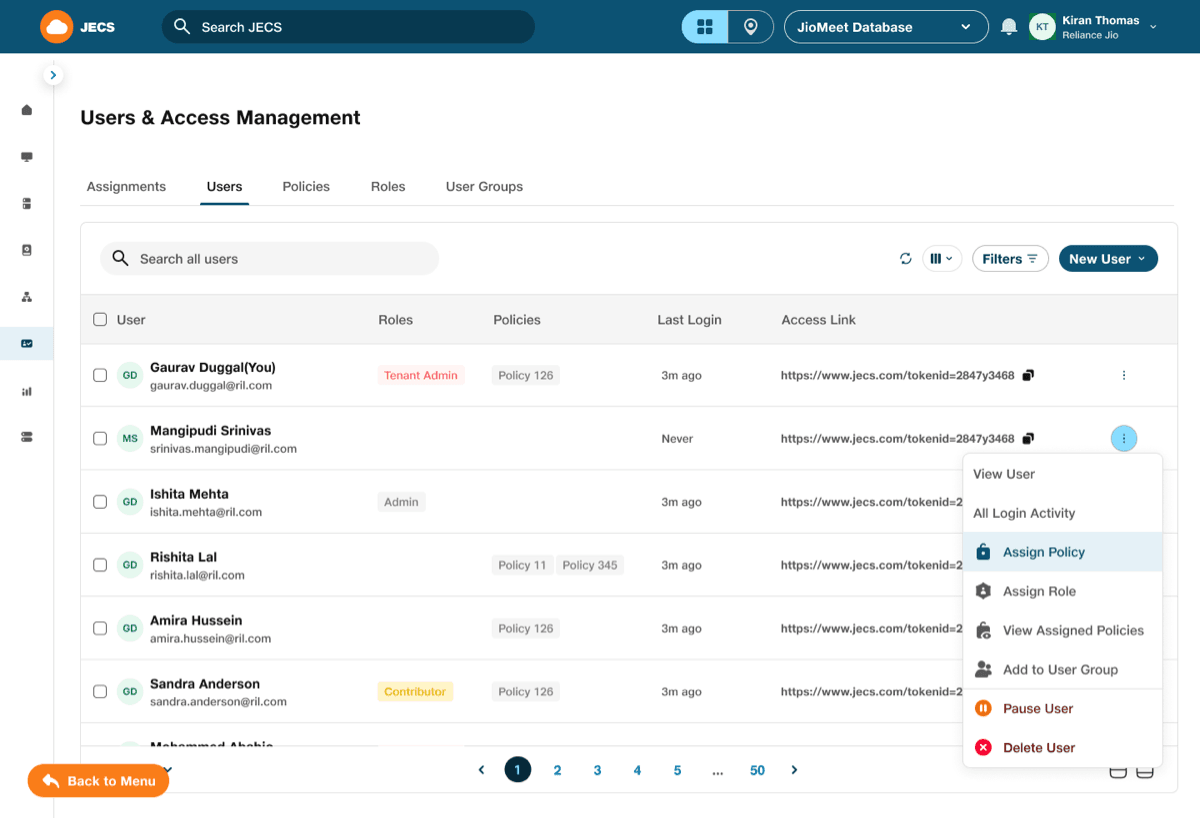
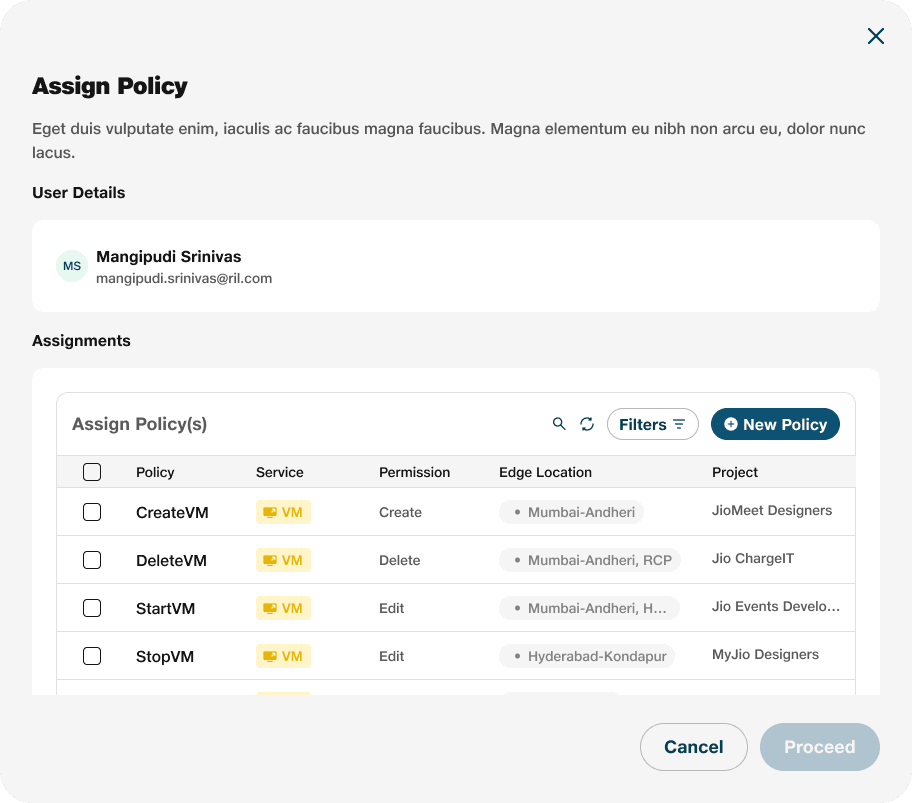
Assignment stays contextual. A policy can be reviewed against the selected user and filtered before it is applied. The same entity language is reused when creating access, assigning policies, and reviewing an existing machine or account.
05 · Interaction
The access flow in motion
The prototype below demonstrates the IAM pipeline for creating roles and permissions. It is included as a product walkthrough rather than evidence of measured task performance.
06 · System expression
Extending the same product thinking beyond IAM
IAM was one part of the engagement. I also explored how operational information could be organised into a dashboard and how the service should present itself in product, launch, and marketing contexts.
Branding and marketing system
The visual-identity work included the product mark, brand applications, generated marketing explorations, and a product video created in Keynote. Logo motion was explored in Jitter and Figma.


07 · Looking back
The architecture is the strongest evidence
The most durable part of this work is not a single screen. It is the model connecting people, groups, roles, policies, permissions, services, and access levels across the platform. Once those relationships were explicit, the interface could reuse the same language in creation, assignment, and review.
Looking back, I would add task-based evaluation with cloud administrators, test high-risk recovery and bulk changes, document the source and freshness of every operational metric, and validate the product story with both technical buyers and day-to-day operators.
Evidence boundary
The available artefacts document design ownership, scope, workflows, and visual output. They do not provide measured usability results or production impact, so this case study does not claim either.